

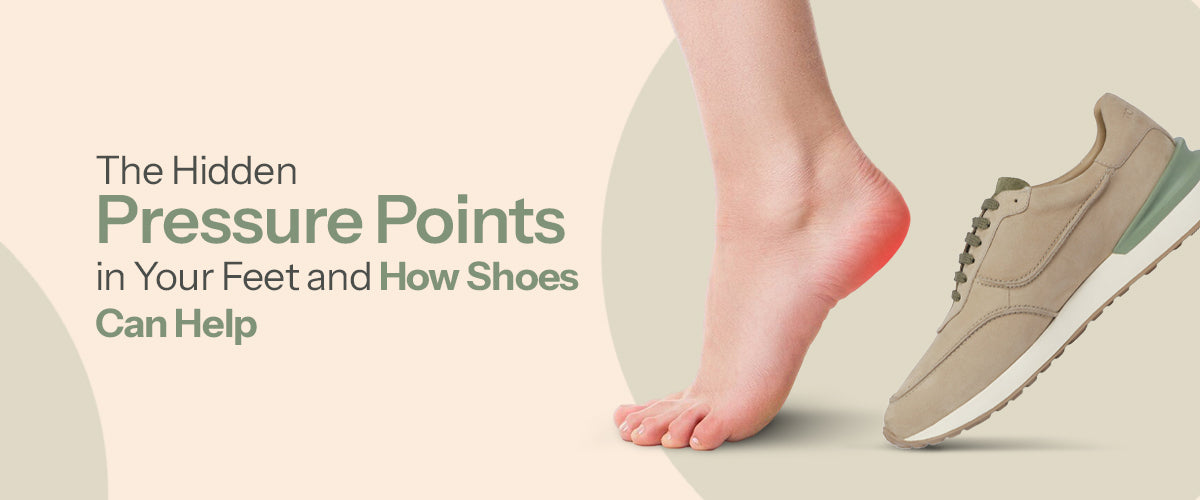
The Hidden Pressure Points in Your Feet and How Shoes Can Help

Your feet carry you through thousands of steps every day, yet they are often the most overlooked part of the body. We think about posture, screens, chairs, and mattresses, but forget that everything begins at ground level. Beneath the surface of your feet lie hidden pressure points, small zones that absorb repeated stress with every step. When these areas are unsupported, discomfort does not stay limited to the feet. It slowly travels upward, affecting ankles, knees, hips, and even the lower back.
The good news is that the right shoes can make a meaningful difference not just in comfort, but in how pressure is distributed, absorbed, and released across your feet. Understanding where these pressure points are and how footwear interacts with them is the first step toward healthier movement.
Why pressure points in the feet matter more than you think
Each foot contains 26 bones, 33 joints, and more than 100 muscles, tendons, and ligaments. Together, they form a flexible structure that adapts to surfaces and absorbs impact. Modern life challenges this system. Hard floors, long hours of standing, repetitive walking patterns, and poorly designed footwear disrupt natural balance.
Pressure points develop when certain parts of the foot repeatedly carry more weight than they should. Over time, this can lead to pain, inflammation, stiffness, and constant fatigue. What often begins as mild soreness can turn into long-term discomfort if ignored.
The key pressure zones in your feet
While every foot is different, most pressure-related issues originate from a few common areas.
The heel
The heel absorbs the initial impact every time your foot meets the ground. Without proper cushioning, impact forces travel upward through the leg. This often results in soreness after long periods of standing or walking.
Shoes with inadequate heel support increase stress in this area. Well-cushioned heels help soften impact and reduce strain over time.
The ball of the foot
The ball of the foot supports much of your body weight during movement. It works hardest when you walk, climb stairs, or push off the ground. Excess pressure here can cause burning sensations, numbness or aching.
Shoes that are too flat, hard, or narrow force this area to work overtime. Forefoot cushioning and sufficient space allow pressure to spread more evenly.
The arch
The arch acts as a natural shock absorber and stabiliser. Whether your arch is high, low, or neutral, it plays a key role in distributing pressure across the foot.
When the arch lacks support, pressure shifts unevenly to the heel and forefoot. This imbalance can contribute to discomfort in the feet, knees, and lower back. Supportive shoes help maintain natural alignment.
The toes
Toes contribute to balance and forward motion, yet they are often compressed by narrow footwear. Restricted movement increases pressure at the front of the foot and affects stability.
Shoes with adequate toe room allow natural toe movement, reducing strain and improving balance.
How everyday shoes influence pressure distribution
Small design details in shoes can significantly affect how pressure travels through your feet.
Flat and unsupportive shoes
Very flat footwear often lacks arch support and cushioning. Over time, pressure concentrates in the heel and ball of the foot.
Overly rigid soles
Shoes that do not bend where the foot naturally bends interfere with movement. This forces other areas to compensate, increasing stress on pressure points.
Poor fit
Shoes that are too tight compress pressure zones, while loose shoes cause the foot to grip constantly. Both situations increase strain and fatigue.
How the right shoes can help relieve pressure points
Good footwear works with the structure of the foot rather than against it.
Effective cushioning
Quality cushioning absorbs shock instead of simply softening the feel. This reduces impact at key pressure zones without sacrificing stability.
Proper arch support
Shoes designed with appropriate arch support help distribute weight evenly. This prevents overloading specific areas and supports overall alignment.
Natural flexibility
A well-designed shoe bends at the ball of the foot. This allows natural movement and reduces stress on joints and tendons.
Stable heel structure
A supportive heel helps maintain alignment and limits excessive rolling of the foot, which can overload pressure points.
Slippers and indoor footwear matter too
Many people focus on outdoor shoes but overlook what they wear indoors. Hard floors combined with thin, flat slippers can stress the feet for hours each day.
Supportive indoor footwear with light cushioning and arch structure can significantly reduce daily foot fatigue, especially for those who spend long hours at home.
Signs your pressure points need better support
Your feet often signal problems early. Common signs include:
- Persistent soreness after routine activities
- Burning or tingling in the forefoot
- Heel pain during the first steps of the day
- Uneven wear on shoe soles
- Increasing fatigue toward the end of the day
These signs usually indicate uneven pressure rather than isolated issues.
Choosing shoes with pressure relief in mind
When selecting footwear, consider how the shoe supports your foot rather than how it looks alone.
Look for even cushioning across the sole, stable midsoles that do not collapse easily, adequate toe space, lightweight construction, and breathable materials that reduce swelling.
Long-term benefits of pressure-aware footwear
Shoes that support pressure points improve more than comfort. They enhance posture, reduce joint strain, and improve endurance throughout the day.
Over time, feet adapt positively. Muscles work more efficiently, balance improves, and daily movement feels easier. These small improvements build gradually and create a lasting impact.
Listen to your feet
Your feet communicate through sensations such as soreness, stiffness, and fatigue. These are signals, not inconveniences. Understanding pressure points helps you respond to what your body needs.
The right shoes cannot solve everything, but they can transform how pressure moves through your feet. When your feet feel supported, the rest of your body benefits.
Sometimes, better well-being begins not with major changes, but with what supports you from the ground up.








Leave a comment
This site is protected by hCaptcha and the hCaptcha Privacy Policy and Terms of Service apply.