

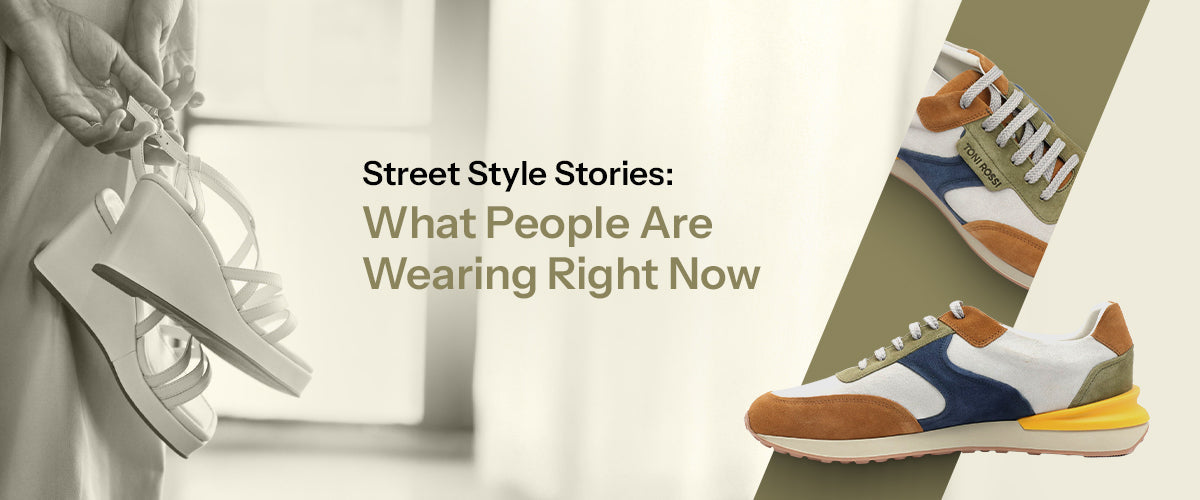
Street Style Stories: What People Are Wearing Right Now

If you really want to understand street style today, don’t look up, look down. Footwear has become the loudest, clearest signal of personal style on the streets. Shoes, slippers and sandals are no longer finishing touches; they’re the starting point. They tell you how someone moves through the city, what they value comfort, nostalgia, statement-making, or quiet luxury and how fashion has shifted from spectacle to real life.
Right now, street style footwear is shaped by three big forces: comfort-first thinking, revival culture, and an almost emotional attachment to everyday practicality. From chunky sneakers to barely-there slippers, what people wear on their feet reflects how they live, commute, scroll, and socialise. Here’s a grounded look at what’s actually showing up on the streets.
Sneakers still rule, but the mood has shifted
Sneakers remain the undisputed king of street style, but the obsession with extreme silhouettes has softened. The era of only oversized, aggressively chunky sneakers is easing into something more balanced.
What you see more often now are retro-inspired trainers with low-profile soles, slimmer shapes, and throwback colourways. These shoes feel familiar, almost comforting, as if borrowed from old family photos or early-2000s memories. They work because they don’t scream for attention; they settle into the rhythm of daily life.
At the same time, functional sneakers are everywhere. Cushioned soles, breathable materials, and all-day wearability matter more than hype. People want shoes they can walk in for hours from metro stations to coffee breaks to late dinners without needing a backup pair in their bag.
The takeaway: sneakers today aren’t trying to dominate the outfit. They’re trying to support the day.
The quiet rise of everyday slippers and slides
One of the biggest street-level shifts is how openly people are wearing slippers, slides and slip-ons outside the home and not just for quick errands.
Padded slides, rubber slippers, and moulded slip-ons have crossed into everyday wear. They’re spotted at cafes, bookstores, airports, and even casual workspaces. What once felt lazy now feels intentional.
This trend is rooted in post-pandemic behaviour. People no longer see discomfort as fashionable. If a slipper allows freedom, ease and speed, it earns its place on the street. The designs have evolved to cleaner lines, muted colours, sculpted soles, making them visually acceptable and socially normal.
Street style has quietly agreed on this: effortless doesn’t mean careless.
Sandals are no longer seasonal
Sandals used to be tied strictly to summer. Not anymore. On the streets, sandals are worn across seasons, layered with socks or styled solo depending on the weather and mood.
What’s popular right now are chunky-sole sandals, thick bases, wide straps, and a sense of sturdiness. These aren’t delicate, barely-there designs. They feel grounded, almost architectural, offering both comfort and presence.
Another strong category is minimal leather sandals, clean straps, neutral shades, and timeless shapes. These appeal to people leaning into understated style, where footwear blends seamlessly into everyday routines rather than standing out.
Sandals today aren’t about vacation energy. They’re about urban ease.
Flats, ballet shoes and the return of softness
After years of sneakers dominating everything, flat shoes are quietly making a return. Ballet flats, soft loafers, and flexible sole shoes are appearing more frequently, especially among people who want comfort without bulk.
Modern flats don’t look like office footwear of the past. They’re softer, more flexible, and styled casually. Some are almost slipper-like in construction, blurring the line between indoor and outdoor shoes.
What makes this trend interesting is the emotional shift behind it. Flats represent a desire for lightness physically and visually. They don’t overpower the body. They allow movement without noise.
In a street style landscape full of visual clutter, flats feel calm.
Statement soles: where people still choose drama
While many are opting for minimal and functional footwear, street style still has room for drama, just in more specific doses.
You’ll spot platform soles, exaggerated treads, and bold textures worn by people who use footwear as their primary expression. Instead of loud colours or logos, the statement now comes from shape, thick soles, curved bases, sculptural forms.
These shoes don’t try to blend in. They anchor the look, often becoming the most photographed element. On the street, they signal confidence and playfulness without relying on excess branding.
The key difference from past years: statement footwear today feels intentional, not trend-chasing.
Footwear colours: neutrals dominate, accents surprise
Colour choices on the street have become more thoughtful. Neutrals dominate whites, off-whites, greys, browns, blacks and muted beiges. These shades work across outfits and settings, making shoes easier to repeat daily.
But there’s also a growing love for single-point colour. Instead of full neon shoes, people are choosing footwear with one unexpected detail: a bright sole, a coloured strap, a contrast stitch.
This restrained use of colour feels mature and wearable. It reflects how street style has moved away from excess toward quiet personality.
Comfort as status
One of the most defining shifts in footwear culture is how comfort itself has become aspirational.
Earlier, expensive or uncomfortable shoes were often worn as markers of style. Now, shoes that look comfortable signal confidence. People are no longer trying to prove they can suffer for fashion.
Cushioned soles, ergonomic shapes, and easy slip-on designs are visible across demographics. Street style no longer celebrates endurance; it celebrates ease.
In many ways, footwear today mirrors mental health conversations: slow down, feel supported, move at your own pace.
Sustainability at street level
Footwear conversations on the street are also quietly influenced by sustainability. More people are conscious about how long a shoe lasts, how often it can be worn, and whether it needs to be replaced constantly.
This shows up in choices like neutral colours, classic shapes, and versatile designs that don’t feel dated quickly. Instead of buying many shoes for different moods, people are investing in fewer, repeatable pairs.
Street style is reflecting this shift subtly, not through slogans, but through repetition. Seeing the same shoes worn across weeks is no longer a faux pas; it’s a flex.
How people are really choosing their footwear now
Observing street style closely reveals a few common decision-making patterns:
- Shoes are chosen before the rest of the look
- Comfort is non-negotiable
- Versatility matters more than novelty
- One standout pair is better than five average ones
- Repeat wear is normal and respected
Footwear today is deeply personal. It’s not about following every trend; it’s about finding what supports your daily rhythm.
What street style footwear tells us
Street style footwear right now is honest. It’s shaped by real life, longer days, faster cities, hybrid routines, and a collective craving for ease. Shoes, slippers and sandals have become reflections of how people want to feel, not just how they want to look.
Whether it’s a worn-in sneaker, a sculpted slide, or a soft flat, the story on the street is clear: footwear is no longer about impressing others. It’s about carrying yourself comfortably through the world.
And if you want to know where fashion is headed next, keep watching the ground the future is walking right past you.








Leave a comment
This site is protected by hCaptcha and the hCaptcha Privacy Policy and Terms of Service apply.