

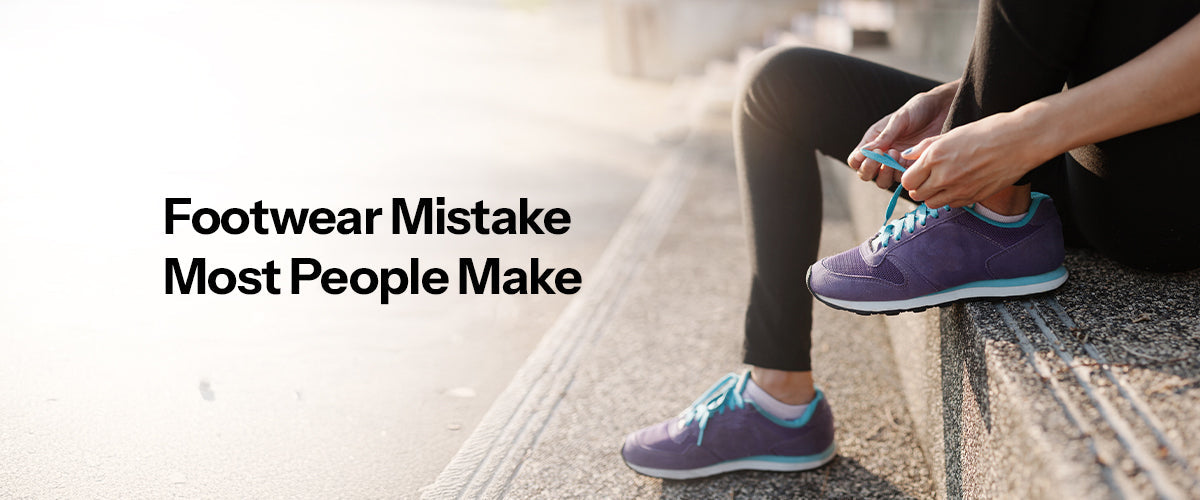
Why Your Feet Feel Tired: The Footwear Mistake Most People Make

By the end of the day, many people share the same complaint. Their feet feel heavy, sore or unusually tired, even if they have not done anything strenuous. It is easy to blame age, long hours or lack of fitness. In reality, the cause is often much simpler and far more common. It comes down to one footwear mistake most people make without realising it.
Foot fatigue is rarely about how much you walk. It is about how your feet are supported while you move. The wrong footwear can drain energy, overload muscles and strain pressure points, even during routine daily activities. Understanding this mistake can change how your feet feel, not just at the end of the day, but over the long term.
What tired feet are really telling you
Feet are complex structures designed to absorb shock, adapt to surfaces and propel the body forward. They do this work silently, step after step. When feet feel tired, sore or achy, it is usually a sign that something in this system is working harder than it should.
Foot fatigue is often misunderstood as normal. Many people accept it as a side effect of modern life. However, consistent tiredness in the feet is feedback. It suggests uneven pressure distribution, lack of support or constant muscle overuse.
Ignoring this feedback does not make it disappear. It simply allows small stresses to accumulate.
The most common footwear mistake people make
The biggest mistake is choosing shoes based only on softness or appearance, rather than support and structure.
Many people believe that flat, soft or flexible footwear is automatically comfortable. In reality, shoes that feel soft underfoot often provide very little support. Without proper structure, the foot is forced to do all the stabilising work on its own.
This leads to constant muscle engagement, especially in the arches, heels and forefoot. Over time, these muscles fatigue, leading to soreness and heaviness even after short periods of walking or standing.
Comfort is not just about softness. It is about how well a shoe supports the natural mechanics of the foot.
How unsupportive footwear drains your energy
When footwear lacks proper support, the foot compensates in several ways.
Muscles work overtime
Without arch support, the muscles in the foot work continuously to keep the foot stable. This constant effort leads to fatigue, much like holding a weight for too long.
Impact is not absorbed properly
Shoes without adequate cushioning fail to absorb shock at the heel and forefoot. This impact travels upward through the legs, increasing overall tiredness.
Pressure builds unevenly
Flat or poorly designed soles concentrate pressure in certain areas. This uneven load causes discomfort and forces the body to adjust posture, which increases energy use.
The result is a feeling of exhaustion that starts in the feet and spreads upward.
Flat does not always mean better
Flat footwear is often assumed to be healthy because it keeps the foot close to the ground. While extreme heels can cause problems, completely flat shoes can be just as harmful when worn daily.
Flat shoes without arch support allow the foot to collapse inward or stretch excessively. This puts strain on ligaments and muscles that are not designed for constant tension.
Over time, this strain contributes to tired feet, sore arches and even discomfort in the knees and lower back.
Balance is key. The foot needs support, not total freedom or total restriction.
Why soft soles can still cause fatigue
Soft soles feel pleasant at first step. However, when the sole compresses too easily, it stops supporting the foot properly.
A shoe that collapses under pressure forces the foot to stabilise itself with every step. This repeated effort leads to muscle fatigue much faster than walking barefoot on a natural surface.
Good cushioning should absorb impact while maintaining shape and stability throughout the day.
The role of poor fit in foot tiredness
Even well-designed footwear can cause fatigue if the fit is wrong.
Shoes that are too tight compress the toes and forefoot, increasing pressure and reducing circulation. Shoes that are too loose force the foot to grip constantly to stay in place.
Both situations increase muscle workload and lead to faster fatigue. Proper fit allows the foot to rest naturally within the shoe rather than fighting against it.
How tired feet affect the rest of the body
Foot fatigue rarely stays isolated. When the feet are unsupported, the body adjusts posture to compensate.
This can lead to:
- Tight calves and ankles
- Knee discomfort
- Hip strain
- Lower back fatigue
The body is a connected system. When the foundation is unstable, everything above it works harder.
Many people treat these symptoms separately without realising that the root cause often starts at the feet.
Indoor footwear is part of the problem
Another overlooked factor is what people wear indoors. Walking barefoot or wearing thin slippers on hard floors places constant stress on the feet.
At home, people often stand for long periods while cooking, cleaning or working. Without any support, the feet absorb repeated impact directly from the floor.
Supportive indoor footwear can significantly reduce daily foot fatigue, especially for those who spend most of their time at home.
What supportive footwear actually does
Supportive shoes do not restrict movement. They guide it.
Proper footwear helps by:
- Supporting the natural arch of the foot
- Absorbing shock at impact points
- Distributing pressure evenly across the sole
- Allowing natural bending at the forefoot
- Keeping the heel stable and aligned
This reduces unnecessary muscle work and allows the foot to move efficiently.
When movement becomes efficient, fatigue reduces naturally.
Signs your footwear is causing tired feet
If you experience any of the following regularly, footwear may be the issue:
- Feet feeling heavy by midday
- Soreness after short walks
- Burning sensation in the forefoot
- Heel pain during the first steps
- Uneven wear on shoe soles
These are not normal signs of ageing or activity. They are signals that your feet are not getting the support they need.
How to choose footwear that reduces fatigue
When selecting shoes, focus on function before appearance.
Look for shoes with moderate cushioning that does not collapse easily, visible arch support, a stable heel structure, enough room for toes to move naturally, and lightweight construction.
The shoe should feel supportive, not just soft, from morning to evening.
Trying shoes later in the day when feet are slightly swollen can also help ensure a better fit.
Long-term impact of better footwear choices
Wearing supportive footwear consistently can change how your feet feel over time.
Muscles become less strained, posture improves, and walking feels easier. Energy levels remain higher throughout the day because the body is no longer compensating for unstable footing.
Over weeks and months, this can reduce chronic pain and improve overall comfort.
Footwear is not a quick fix. It is a daily support system.
Tired feet are not inevitable
Feeling tired at the end of the day is normal. Feeling tired in your feet every single day is not.
The most common footwear mistake is confusing softness with support. Once you correct this, your feet can move the way they were designed to.
Pay attention to what you wear on your feet. Small changes at ground level can make a noticeable difference in how your entire body feels.
Sometimes, the solution to daily fatigue starts with the simplest question. Are your shoes actually supporting you?








Leave a comment
This site is protected by hCaptcha and the hCaptcha Privacy Policy and Terms of Service apply.